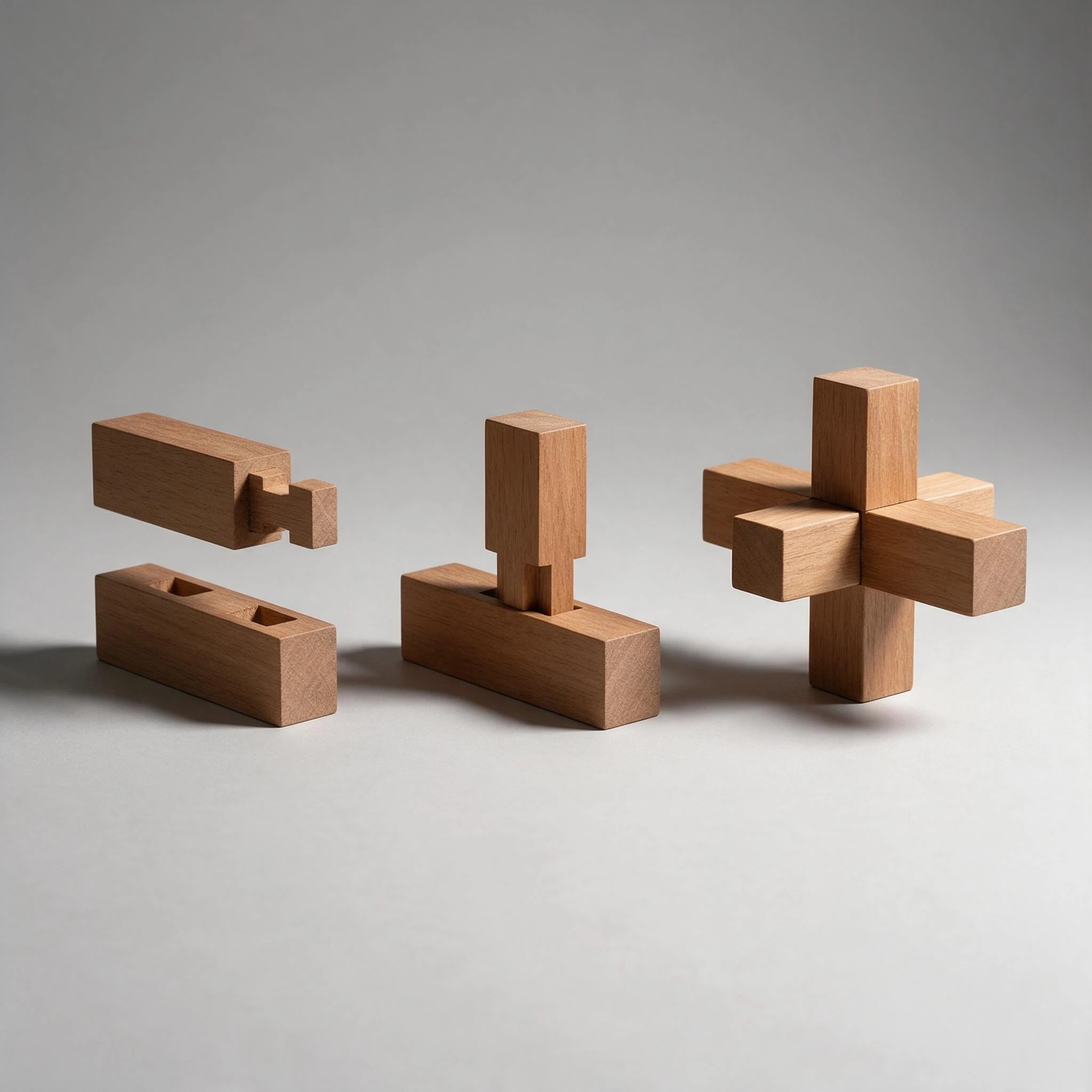
Older than bronze, lacquer is an indestructible organic armor forged from toxic botanical sap. Curing exclusively in absolute darkness and hand-burnished for months, it is the ultimate luxury of time—a mirror-black abyss sealing deep-sea shells and precious minerals for eternity.
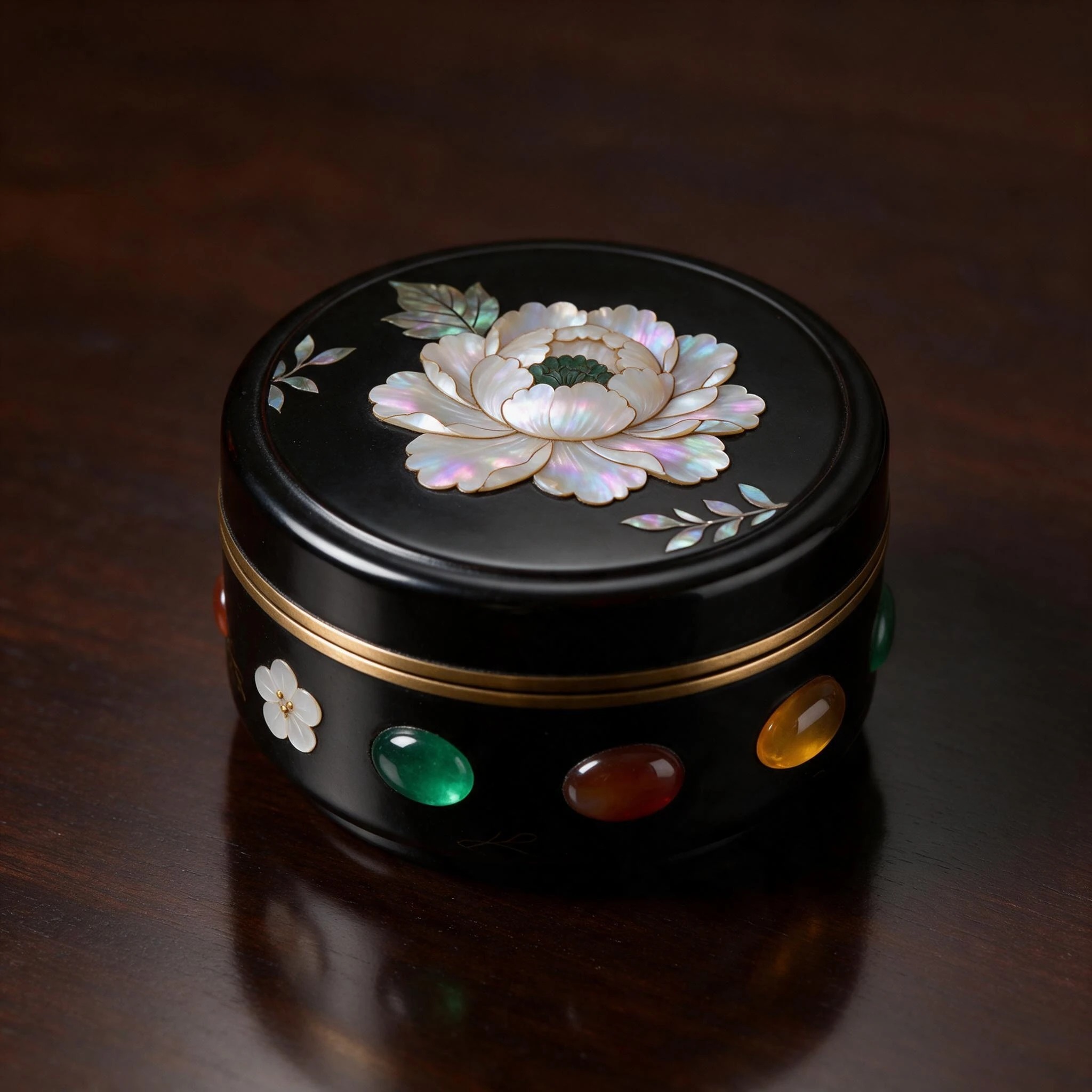
Over 7,000 years ago, ancient builders realized a fundamental physical truth: metal nails rust, and rigid joints break under stress. Because timber naturally expands and contracts with humidity, hammering iron into wood ultimately destroys the material from the inside out. To solve this, Neolithic engineers developed a purely wooden solution—the mortise (the concave socket) and the tenon (the convex tongue). By cutting exact geometric nodes, the timber itself becomes the fastener. This skeletal framework allowed early empires to construct towering, multi-story pagodas and massive palace roofs that float entirely without load-bearing walls. When major earthquakes strike, these wooden skeletons do not snap. The joints flex, absorb the kinetic energy of the tremors, and settle back into their original locked positions.
The extreme value of authentic mortise-and-tenon joinery lies in its zero-tolerance mathematical precision. A master carpenter must calculate the moisture content, ambient humidity, and load-bearing vectors of a specific hardwood log before making a single cut. Using only hand saws and chisels, the male and female nodes must be carved to a tolerance of a fraction of a millimeter. If the tenon is too large, driving it in will split the socket. If it is too small, the joint will immediately collapse under weight. When executed correctly and driven home with a wooden mallet, the joint achieves a vacuum-like friction seal. These locks form a mechanical puzzle that cannot be disassembled without knowing the exact sequential order of construction. You are acquiring centuries of advanced structural physics executed entirely by human hands.
Over 7,000 years ago, ancient builders realized a fundamental physical truth: metal nails rust, and rigid joints break under stress. Because timber naturally expands and contracts with humidity, hammering iron into wood ultimately destroys the material from the inside out. To solve this, Neolithic engineers developed a purely wooden solution—the mortise (the concave socket) and the tenon (the convex tongue). By cutting exact geometric nodes, the timber itself becomes the fastener. This skeletal framework allowed early empires to construct towering, multi-story pagodas and massive palace roofs that float entirely without load-bearing walls. When major earthquakes strike, these wooden skeletons do not snap. The joints flex, absorb the kinetic energy of the tremors, and settle back into their original locked positions.
To prove the kinetic superiority of this friction-locked geometry, structural engineers recently placed a scale model of the Forbidden City—built entirely with traditional timber joints and zero nails—on an earthquake simulator. When hit with a devastating 10.0 magnitude tremor, the brick walls shattered and collapsed, but the wooden skeleton simply flexed, danced, and remained completely standing.
The artifacts curated within this category are governed by the highest echelons of protected structural engineering. The core execution protocols of our workshops rely directly on Classical Furniture Making and Traditional Timber Architecture—disciplines officially inscribed on the National Intangible Cultural Heritage List of China (Category: Traditional Handicraft, Official Project Code: VIII-108). Furthermore, the overarching structural mechanics of this joinery system are rigorously protected by the UNESCO Representative List of the Intangible Cultural Heritage of Humanity (Official UNESCO Code: 00227). Every piece stands as a certified vessel of living history, engineered to outlast generations.
Authentic mortise-and-tenon hardwood frameworks operate as heavy store-of-value assets, with structural masterworks commanding aggressive valuations from $50,000 to over $4,000,000 USD.