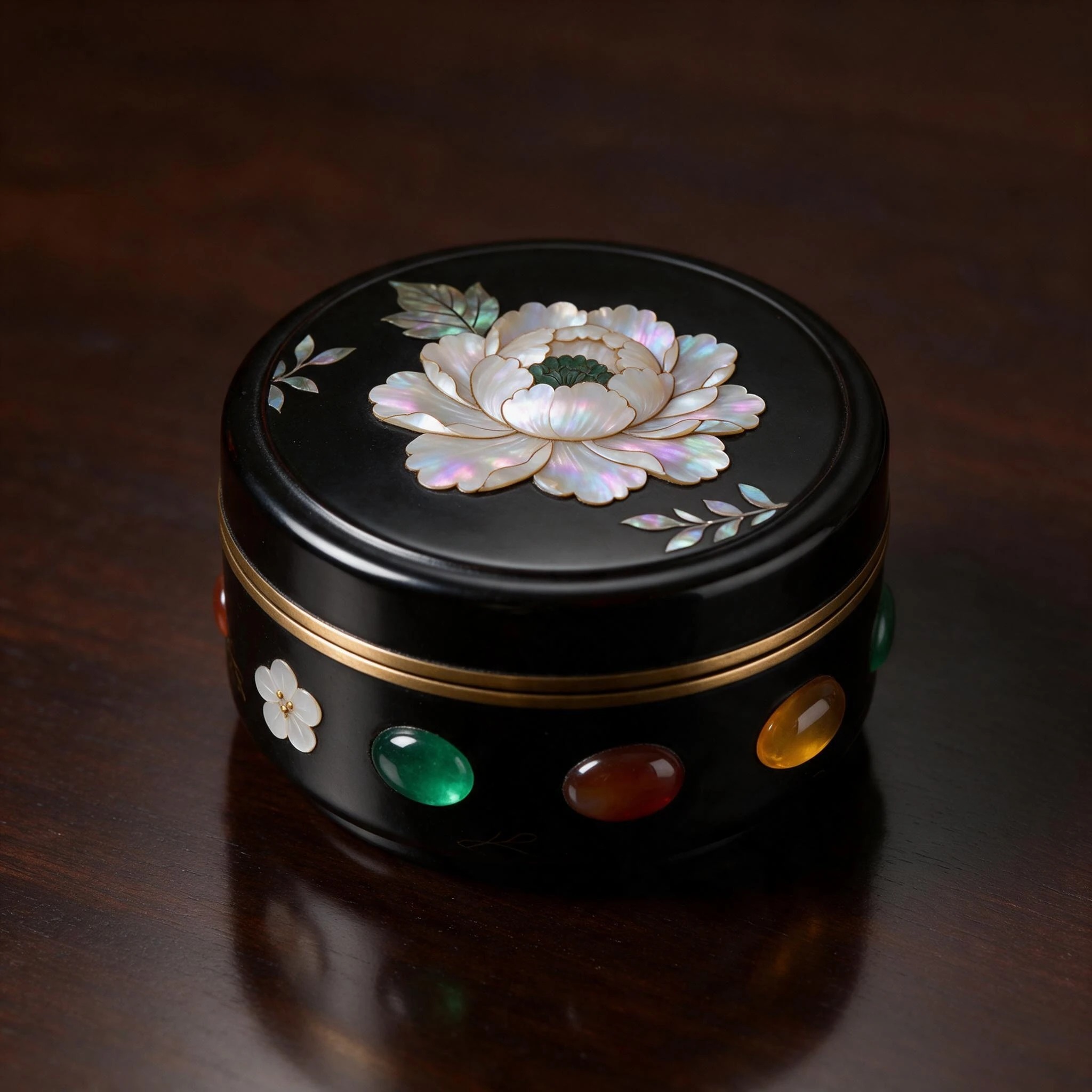
Older than bronze, lacquer is an indestructible organic armor forged from toxic botanical sap. Curing exclusively in absolute darkness and hand-burnished for months, it is the ultimate luxury of time—a mirror-black abyss sealing deep-sea shells and precious minerals for eternity.
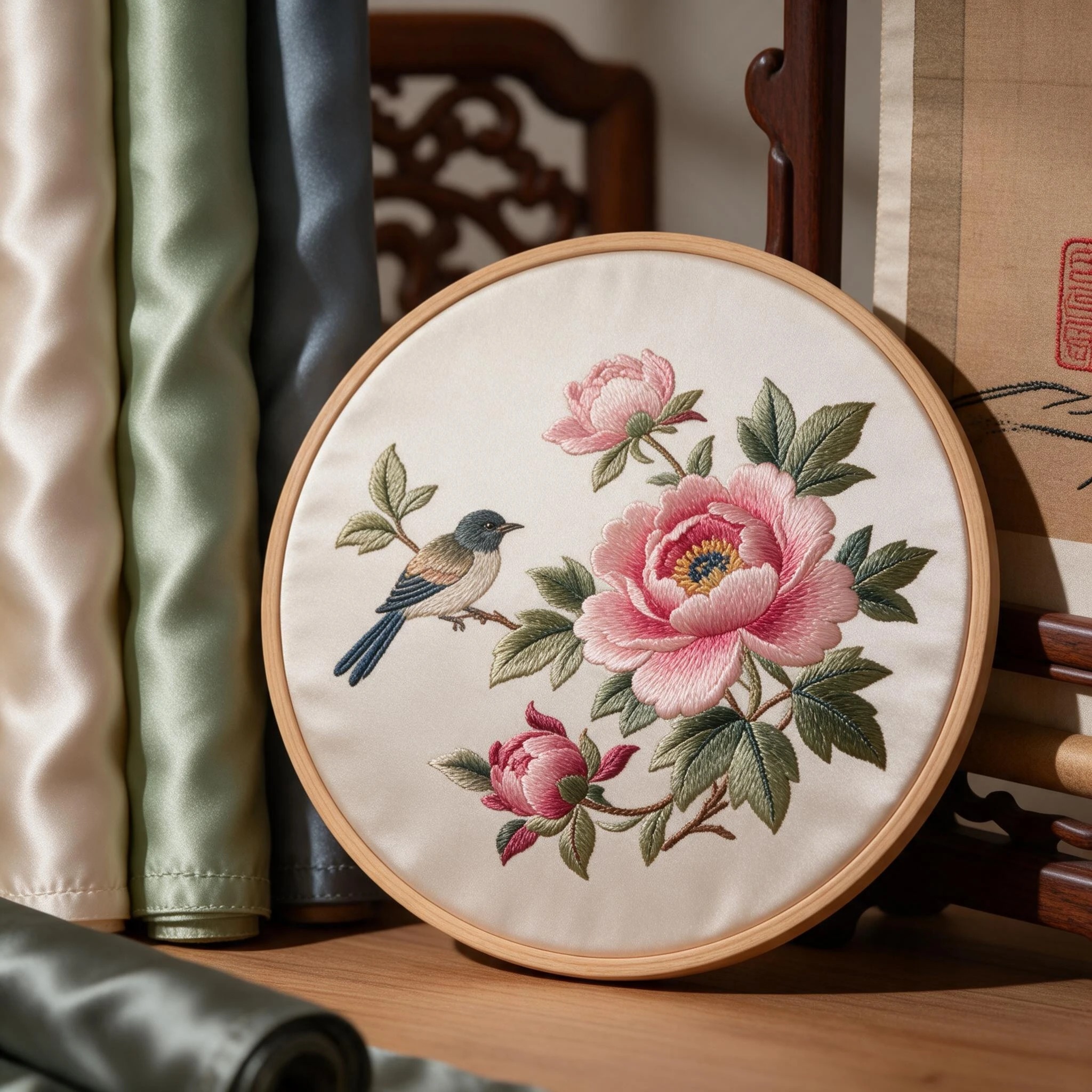
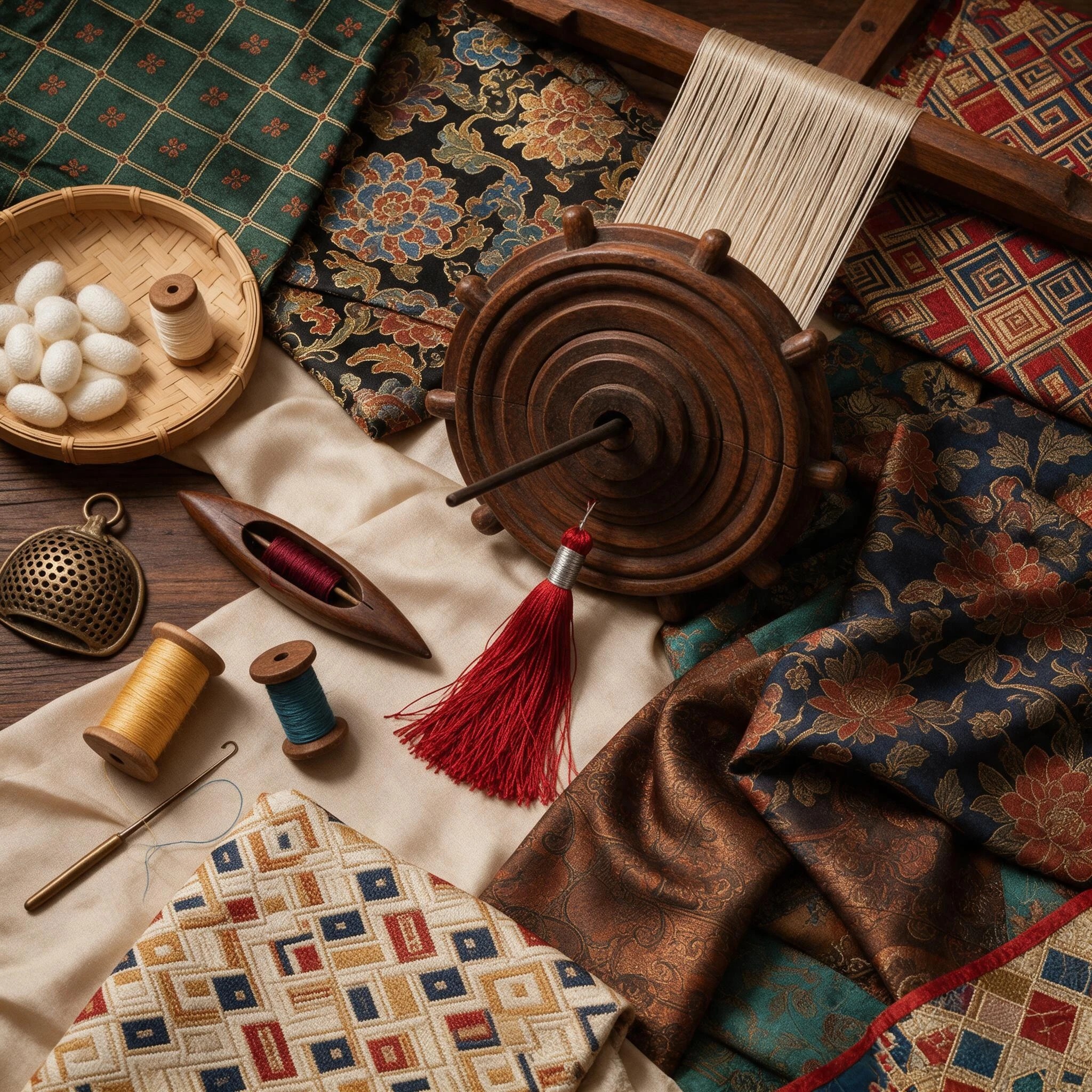
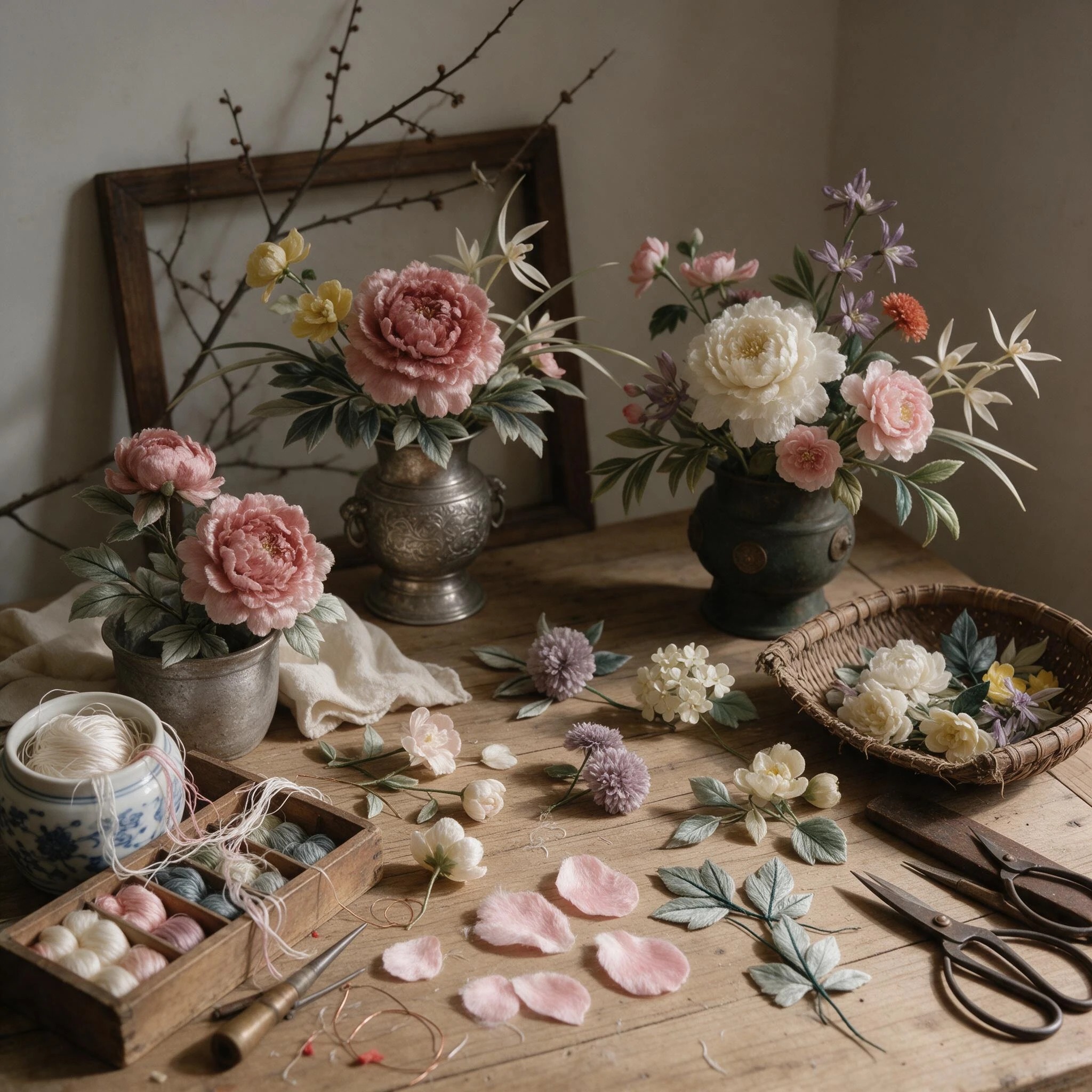
3,005 years ago (circa 1000 BC), Eastern textile engineers unlocked the thermodynamic and optical properties of biological silk spun by the Bombyx mori moth. Unlike cotton or linen, which absorb light, a single silk filament is a natural triangular prism that refracts light like a microscopic diamond. Classical embroidery was born not as mere decoration, but as an advanced optical engineering discipline. By mathematically calculating the directional angles, tension, and layering of these protein prisms, ancient artisans discovered they could paint with light itself. Over millennia, this discipline evolved from armoring the ceremonial robes of emperors to mastering the topological impossibility of "double-sided embroidery"—where a single translucent membrane displays two entirely different, perfectly locked optical matrices on its front and back, with zero visible knots. It is a biological hologram powered entirely by human hands.
In the realm of high craftsmanship, true luxury is measured by the irreversible consumption of human life. The structural foundation of this art defies modern industrial logic. A master embroiderer does not simply thread a needle; they take a single strand of raw silk—already thinner than a human hair—and physically split it by hand into 16, 32, or even 64 microscopic filaments. Wielding surgical-grade steel needles, they execute tens of thousands of microscopic stitches over a tightly stretched silk drum. A single museum-grade panel requires a master to sit in absolute stillness for 8 to 12 hours a day, for 6 to 18 consecutive months. There is no eraser, no "undo" command; a single miscalculated stitch destroys the kinetic tension of the entire silk canvas. You are not purchasing a piece of decorated fabric; you are acquiring the absolute zenith of human ocular endurance and mechanical precision, solidified into a physical artifact.
3,005 years ago (circa 1000 BC), Eastern textile engineers unlocked the thermodynamic and optical properties of biological silk spun by the Bombyx mori moth. Unlike cotton or linen, which absorb light, a single silk filament is a natural triangular prism that refracts light like a microscopic diamond. Classical embroidery was born not as mere decoration, but as an advanced optical engineering discipline. By mathematically calculating the directional angles, tension, and layering of these protein prisms, ancient artisans discovered they could paint with light itself. Over millennia, this discipline evolved from armoring the ceremonial robes of emperors to mastering the topological impossibility of "double-sided embroidery"—where a single translucent membrane displays two entirely different, perfectly locked optical matrices on its front and back, with zero visible knots. It is a biological hologram powered entirely by human hands.
While standard embroidery relies on silk, classical artisans pushed the limits of the medium by utilizing actual human hair. Because human hair is highly resilient and never fades in color, aristocratic women would clip their own tresses to embroider hyper-realistic landscapes and portraits. This biological integration meant the artifact literally carried the DNA of its creator for centuries.
The artifacts curated within this category represent the absolute zenith of protected human textile engineering. The core execution protocols of our workshops rely directly on Traditional Embroidery Craftsmanship—disciplines officially inscribed on the National Intangible Cultural Heritage List of China (Category: Traditional Fine Arts, Official Project Codes: VII-18, VII-19, VII-20, and VII-21). Furthermore, the foundational biological engineering of the silk base and the intricate manipulation of the protein threads are strictly governed by the UNESCO Representative List of the Intangible Cultural Heritage of Humanity (Official UNESCO Code: 00257). Every piece stands as a certified vessel of living history, engineered to outlast generations.
At the apex of the textile market, master-executed dual-sided silk matrices routinely secure valuations between $20,000 and $250,000 USD, functioning less as fabric and more as highly liquid physical assets.