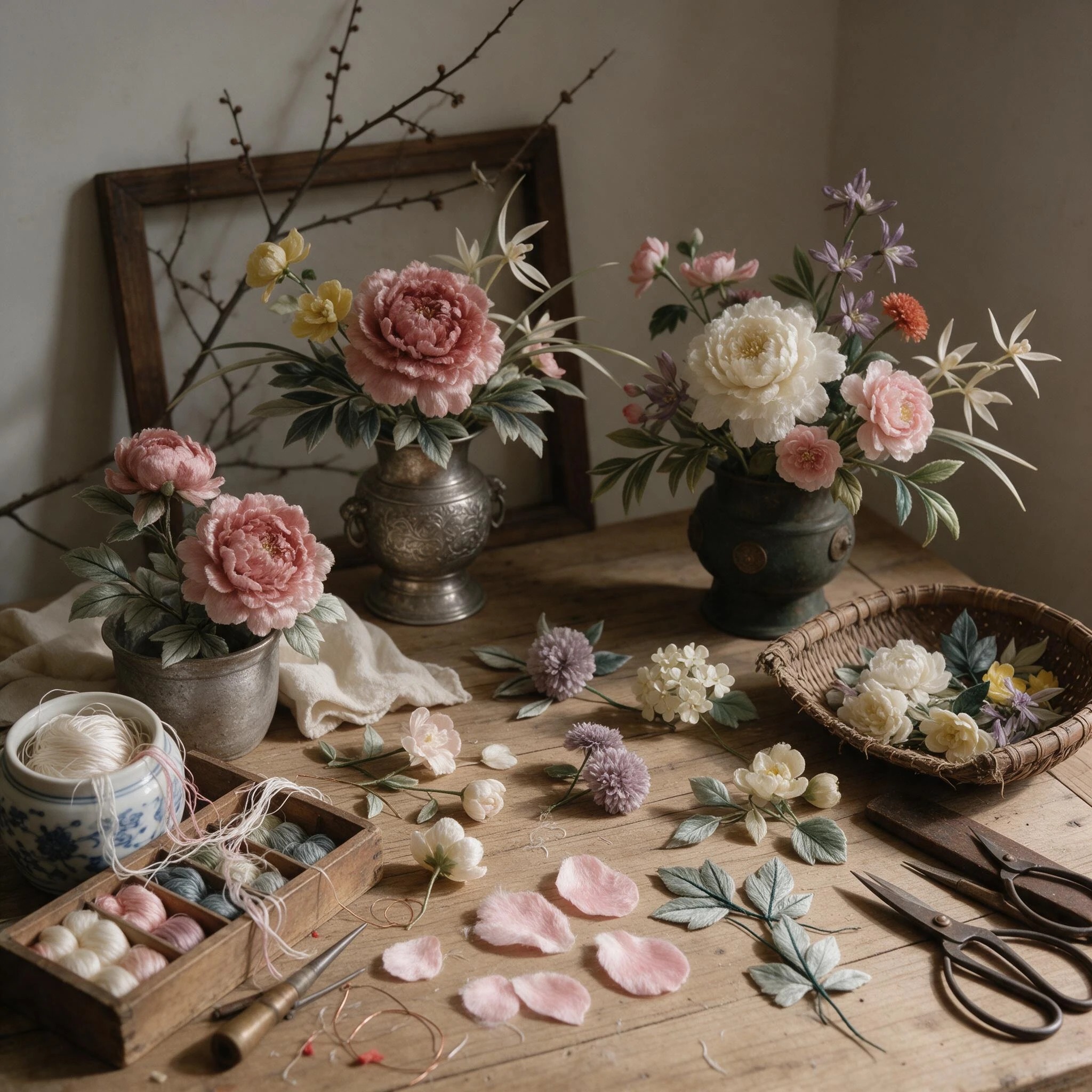
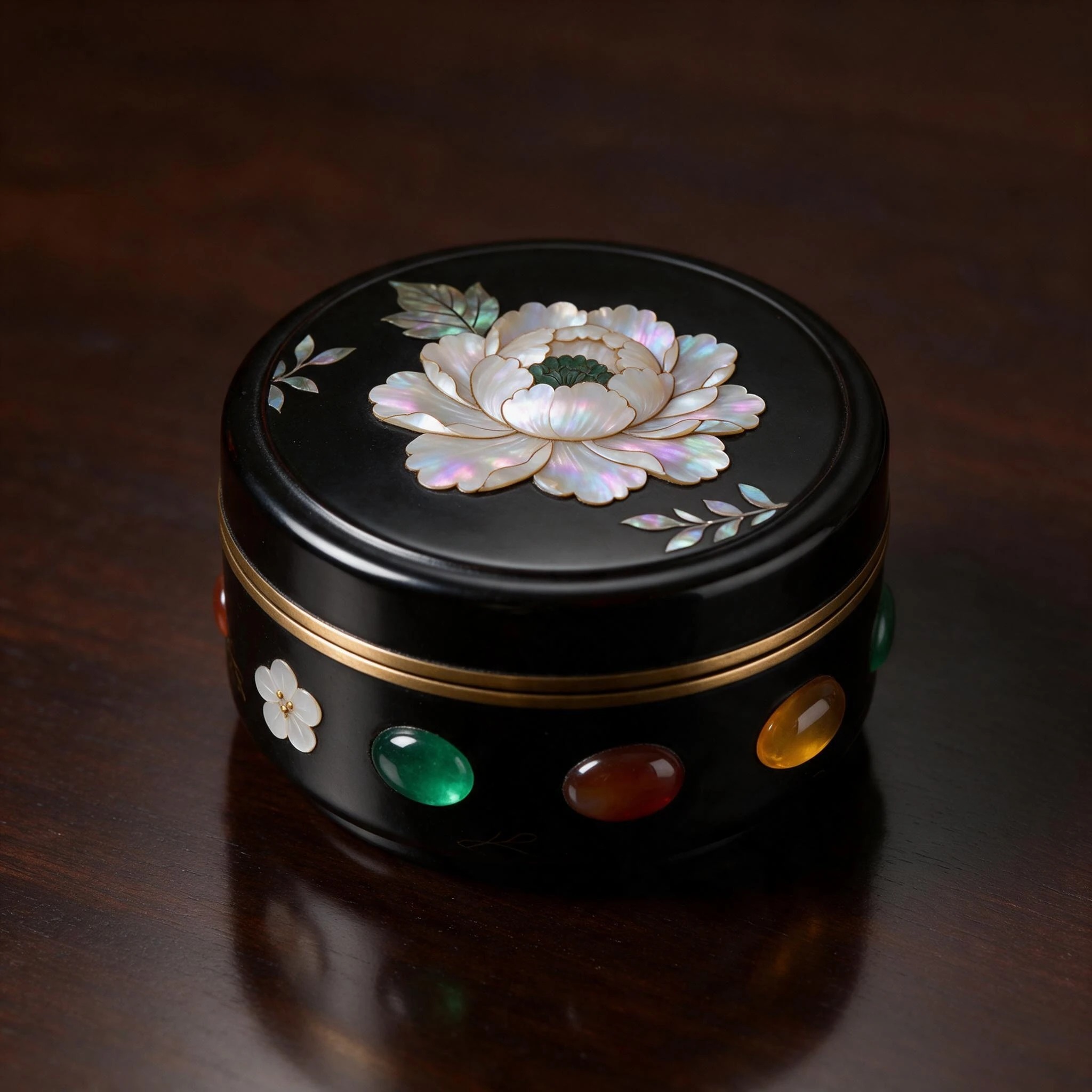
Older than bronze, lacquer is an indestructible organic armor forged from toxic botanical sap. Curing exclusively in absolute darkness and hand-burnished for months, it is the ultimate luxury of time—a mirror-black abyss sealing deep-sea shells and precious minerals for eternity.
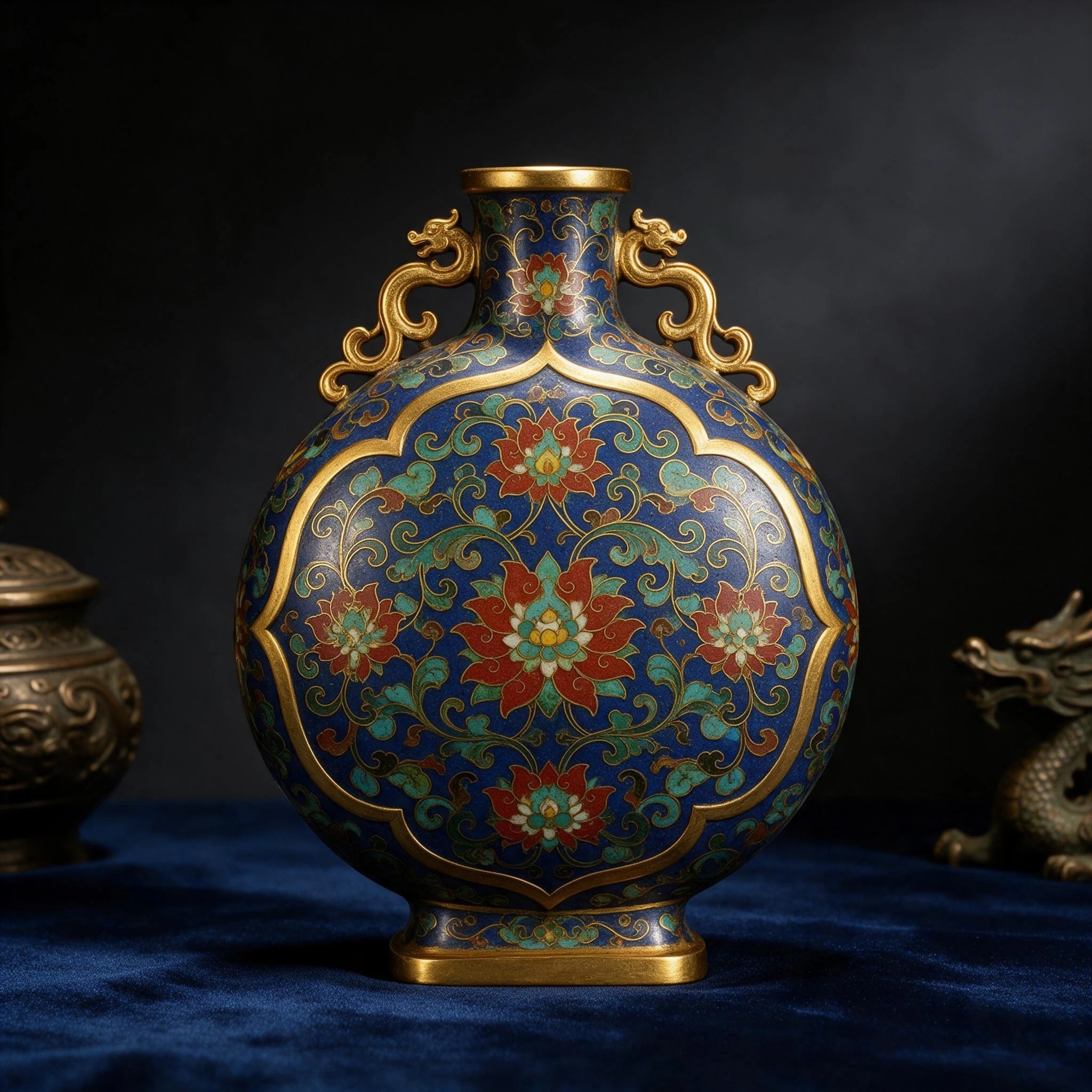
Roughly 726 years ago, during the late 13th century, Eastern imperial workshops absorbed a rudimentary Byzantine metalworking technique and engineered it into an absolute monopoly of state power. The breakthrough occurred when imperial metallurgists conquered the extreme thermal expansion coefficients between copper and glass. If the cooling rates did not match perfectly, the glass would violently shatter the moment it left the kiln. By the 15th century, during the Jingtai reign, artisans isolated specific copper oxides to produce a blinding, highly stable turquoise-blue glass. This specific chemical achievement became so famous that the craft itself was permanently named after the era. Unlike porcelain, which was exported globally, authentic imperial cloisonné was strictly forbidden from leaving the palace walls for centuries, functioning exclusively as heavy altar vessels and throne room architecture for the Emperor.
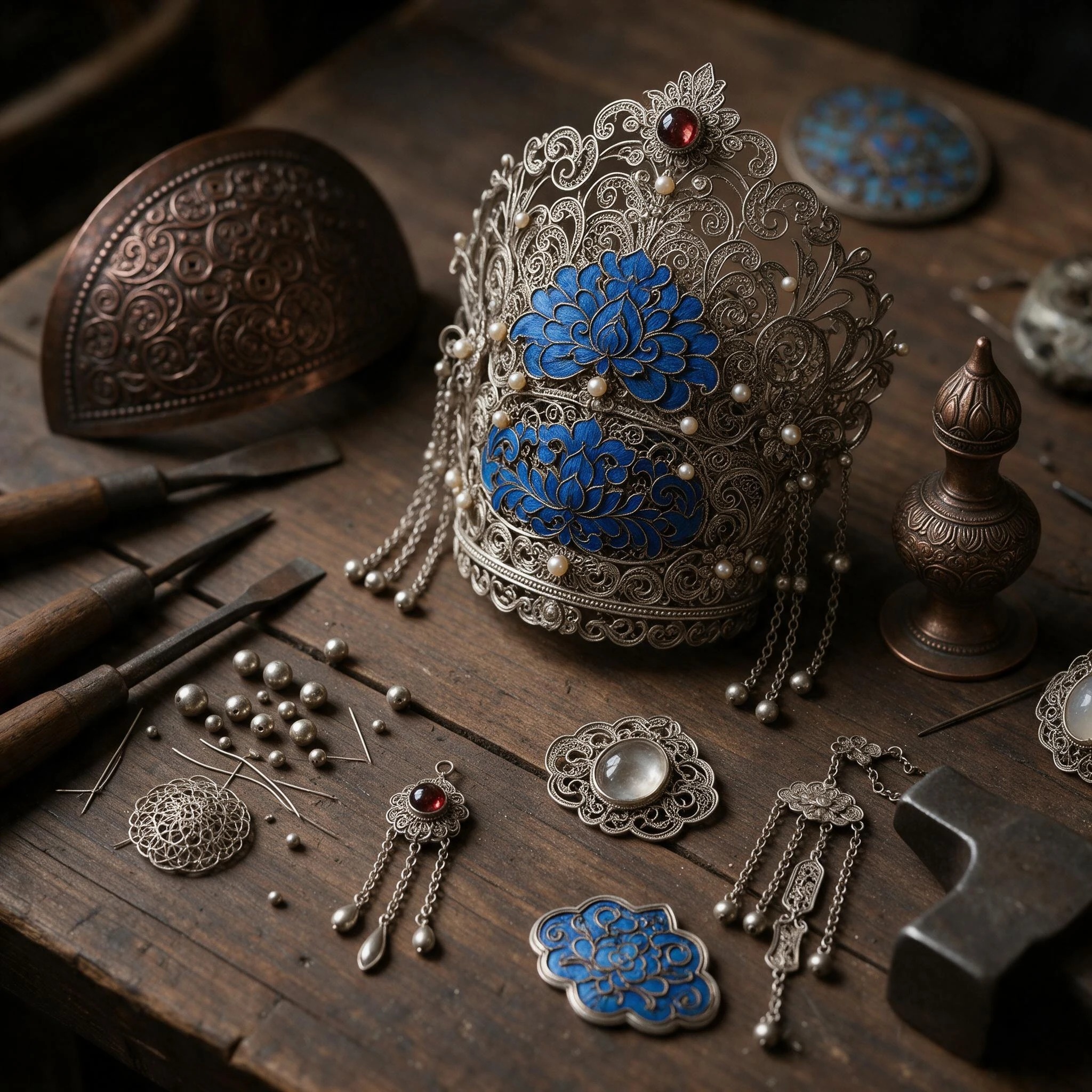
The massive cost of this craft stems from its grueling, multi-stage physical abuse of materials. A copper vessel serves merely as the blank canvas. Artisans take flat, ribbon-like copper wire—measuring fractions of a millimeter in thickness—and bend it with tweezers into thousands of closed cellular chambers. Every single wire is then soldered to the copper base over an open flame. Once the metallic blueprint is locked, workers pack the empty cells with crushed mineral glass. Because glass liquefies and shrinks by up to one-third of its volume during firing, a single piece must be pulled from the 800-degree Celsius kiln, cooled, refilled with more glass powder, and refired up to four separate times just to fill the copper cells to the brim. Finally, the charred, uneven object is subjected to severe physical abrasion using coarse stones, water, and charcoal until the glass surface and the copper wires are ground perfectly flat.
Roughly 726 years ago, during the late 13th century, Eastern imperial workshops absorbed a rudimentary Byzantine metalworking technique and engineered it into an absolute monopoly of state power. The breakthrough occurred when imperial metallurgists conquered the extreme thermal expansion coefficients between copper and glass. If the cooling rates did not match perfectly, the glass would violently shatter the moment it left the kiln. By the 15th century, during the Jingtai reign, artisans isolated specific copper oxides to produce a blinding, highly stable turquoise-blue glass. This specific chemical achievement became so famous that the craft itself was permanently named after the era. Unlike porcelain, which was exported globally, authentic imperial cloisonné was strictly forbidden from leaving the palace walls for centuries, functioning exclusively as heavy altar vessels and throne room architecture for the Emperor.
To the untrained eye, a cloisonné vase looks exactly like a fragile piece of painted porcelain. However, if you drop it on a marble floor, it will not shatter; it will dent the floor. Because it is essentially a solid copper vault packed with heavy mineral glass, a cloisonné artifact effortlessly weighs five times more than a porcelain vessel of the exact same dimensions.
The artifacts curated within this category are governed by the highest echelons of protected metallurgical and glass engineering. The core execution protocols of our workshops rely directly on Traditional Jingtailan Craftsmanship (Cloisonné Enameling)—a discipline strictly guarded and officially inscribed on the National Intangible Cultural Heritage List of China (Category: Traditional Handicraft, Official Project Code: VIII-48). Every piece stands as a certified vessel of living history, engineered to project weight, permanence, and imperial authority.
Driven by their massive architectural weight and complex thermal execution, genuine imperial-grade cloisonné vessels maintain formidable market caps, ranging from $30,000 to $2,500,000 USD.