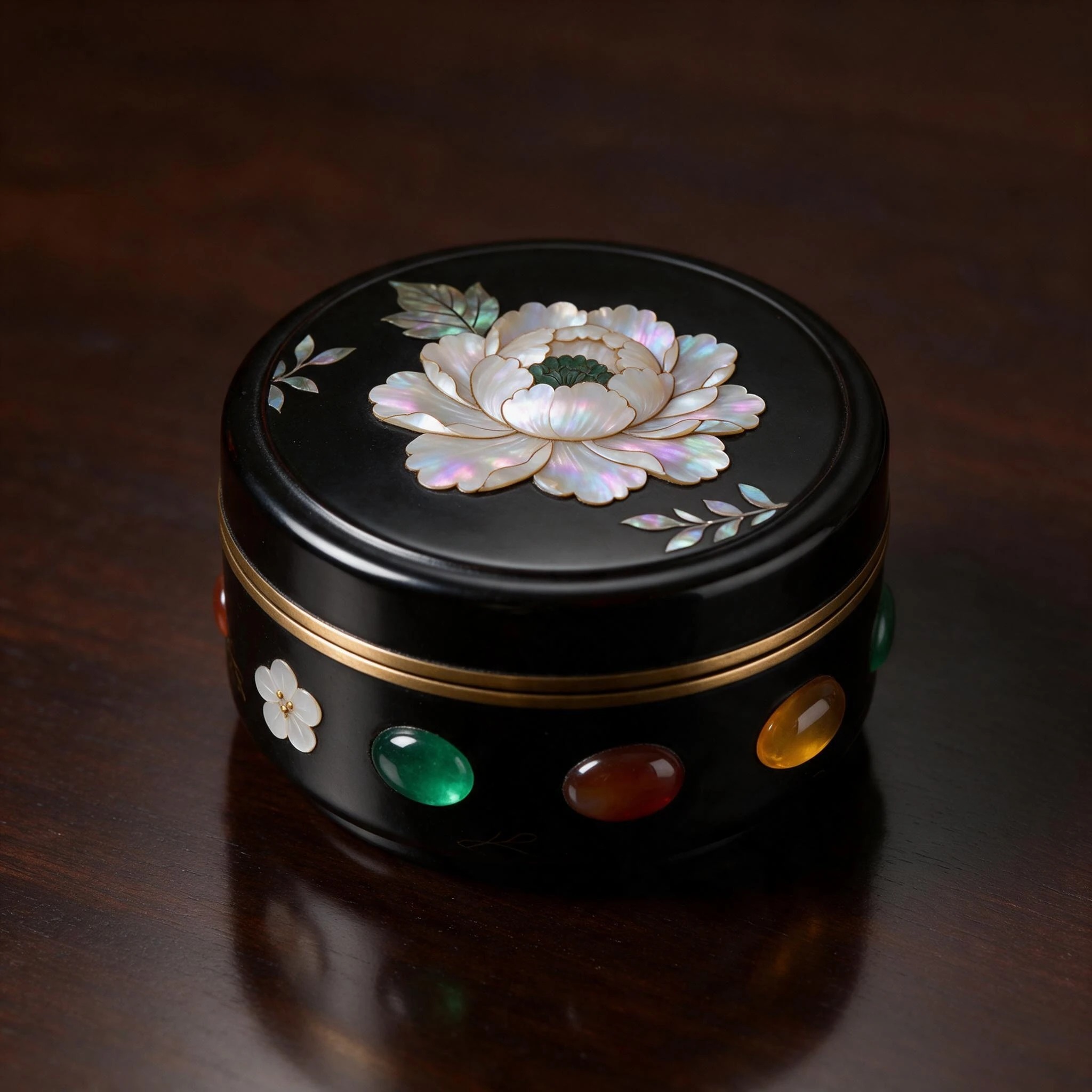
Older than bronze, lacquer is an indestructible organic armor forged from toxic botanical sap. Curing exclusively in absolute darkness and hand-burnished for months, it is the ultimate luxury of time—a mirror-black abyss sealing deep-sea shells and precious minerals for eternity.
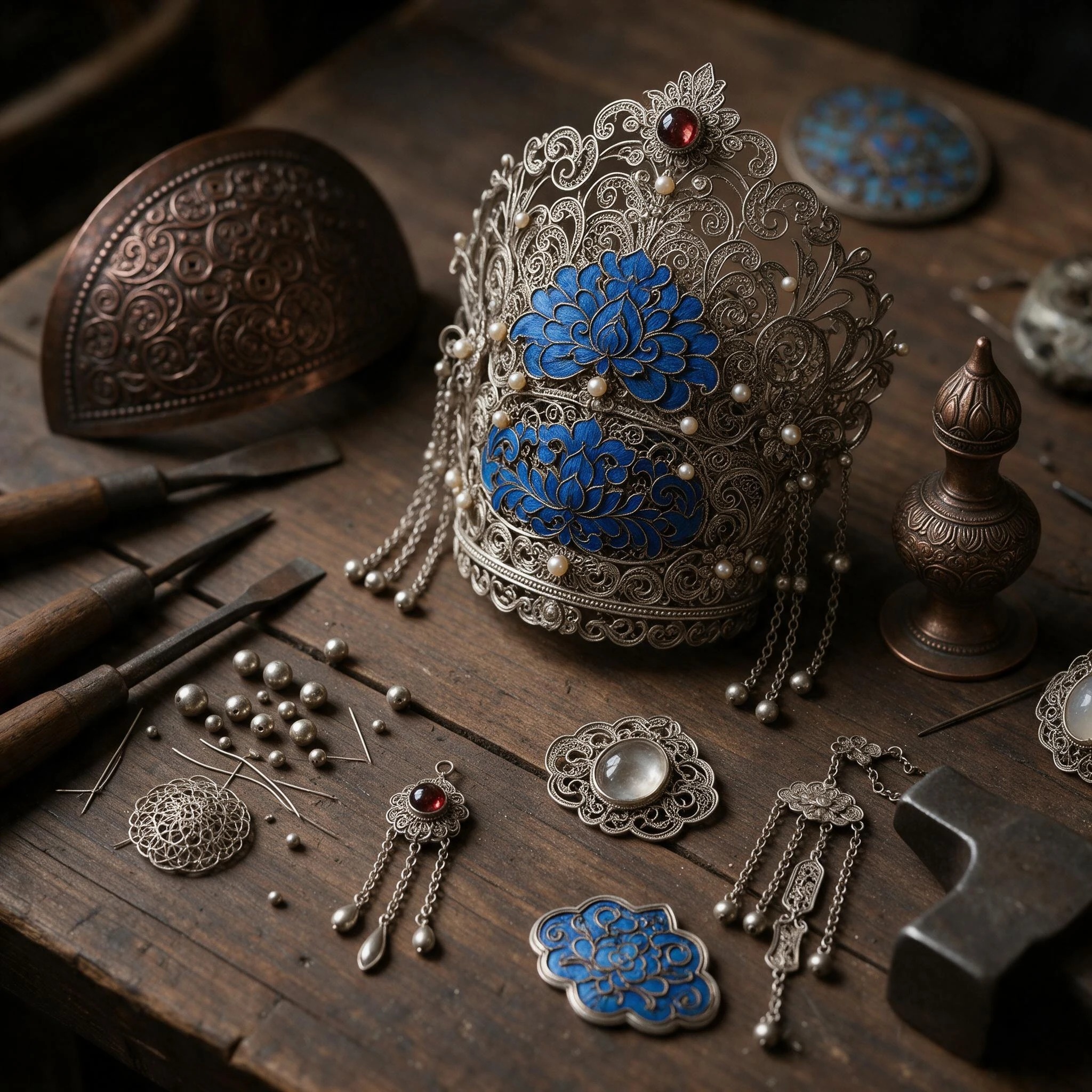
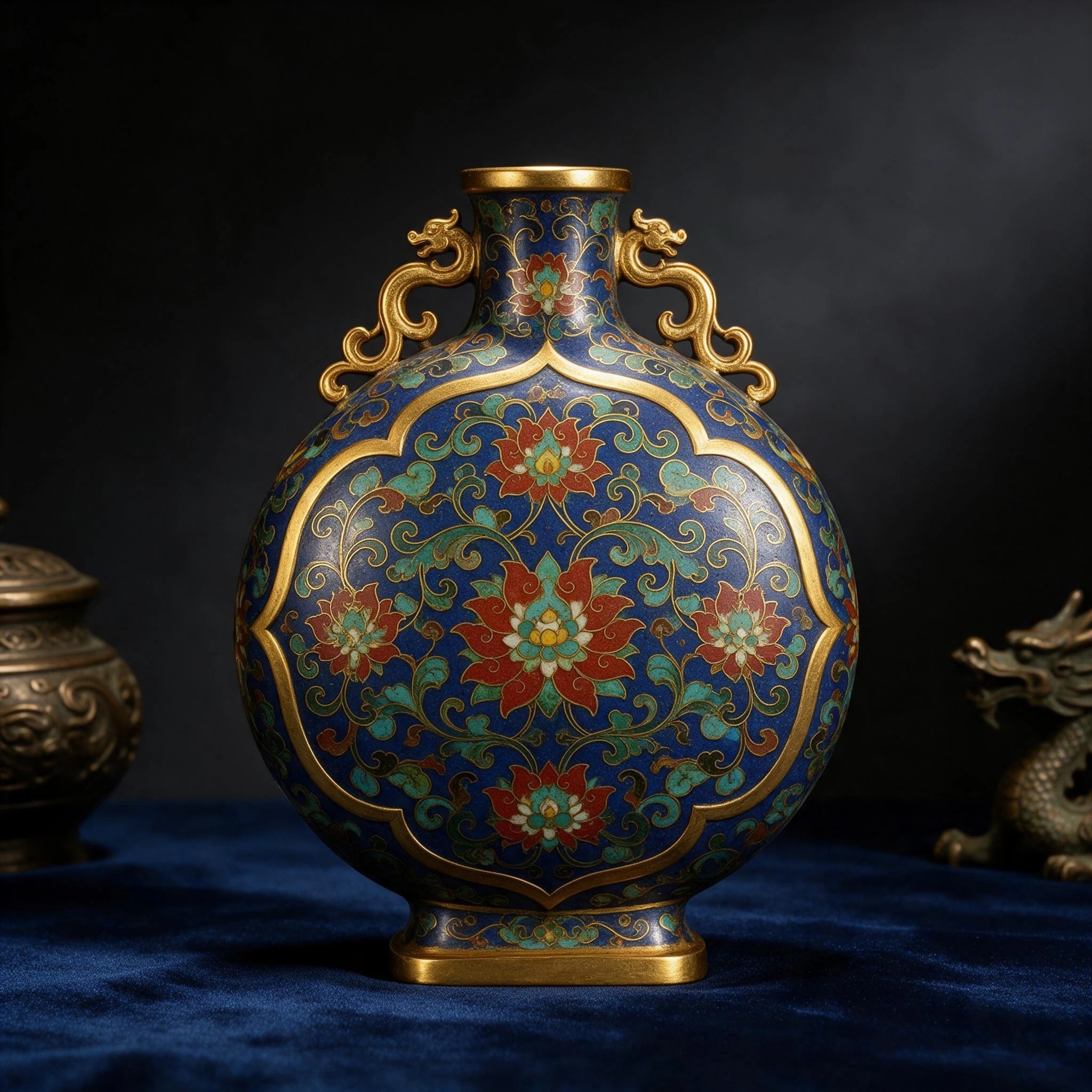
3,850 years ago, Eastern metallurgists tamed the extreme thermodynamics of the Bronze Age kilns, gradually shifting their engineering from massive, monolithic weaponry to the microscopic manipulation of pure gold and silver. As ancient empires expanded, so did their command over metal ductility and structural physics. Artisans discovered that pure gold, when heated to its exact malleability threshold, could be mechanically drawn into threads thinner than human hair, or struck with thousands of microscopic chisel blows to erupt into highly muscular, three-dimensional reliefs. This was no longer mere blacksmithing; it was metallurgical micro-surgery. By the later dynasties, this engineering reached a terrifying aesthetic apex: fusing rigid, cold metallic skeletons with the biological, iridescent barbs of kingfisher feathers. This cross-disciplinary breakthrough allowed heavy metallic crowns and ornaments to capture light like living organisms, projecting an undeniable aura of imperial authority.
The Mind-boggling cost of classical metalwork lies not merely in the bullion weight of 24-karat gold or pure silver, but in the irreversible consumption of human energy and the unforgiving nature of the process. To construct a single filigree lattice, an artisan must manually draw a gold ingot through progressively smaller diamond dies until it becomes a micro-filament. Multiple filaments are then twisted together and welded over an open precision flame. A single miscalculation in the torch’s temperature—even by a fraction of a second—will instantly melt weeks of labor into a useless puddle of slag. In the art of chasing and repoussé, a silversmith strikes a steel punch with a specialized hammer tens of thousands of times to push the cold metal into a three-dimensional topography without ever piercing the membrane. You are acquiring the absolute zenith of human thermodynamic control and mechanical endurance.
3,850 years ago, Eastern metallurgists tamed the extreme thermodynamics of the Bronze Age kilns, gradually shifting their engineering from massive, monolithic weaponry to the microscopic manipulation of pure gold and silver. As ancient empires expanded, so did their command over metal ductility and structural physics. Artisans discovered that pure gold, when heated to its exact malleability threshold, could be mechanically drawn into threads thinner than human hair, or struck with thousands of microscopic chisel blows to erupt into highly muscular, three-dimensional reliefs. This was no longer mere blacksmithing; it was metallurgical micro-surgery. By the later dynasties, this engineering reached a terrifying aesthetic apex: fusing rigid, cold metallic skeletons with the biological, iridescent barbs of kingfisher feathers. This cross-disciplinary breakthrough allowed heavy metallic crowns and ornaments to capture light like living organisms, projecting an undeniable aura of imperial authority.
The physical ductility of the 24-karat gold used in classical filigree defies logic. A single ounce (roughly 28 grams) of pure gold can be manually drawn through diamond dies into a microscopic continuous wire stretching over 50 miles (80 kilometers) without snapping. Artisans exploit this extreme metallurgical property to build massive geometric crowns that visually look like solid gold but weigh less than an apple.
The artifacts curated within this category are governed by the highest echelons of protected metallurgical engineering. The core execution protocols of our workshops rely directly on Filigree Inlay Craftsmanship, Traditional Silver Forging, and Metal Chasing—disciplines officially inscribed on the National Intangible Cultural Heritage List of China (Category: Traditional Handicraft, Official Project Codes: VIII-15, VIII-106, and VIII-113). Every piece stands as a certified vessel of living history, engineered to outlast generations.
Uncompromising filigree and chased metallic architectures command extreme market premiums, with master-forged artifacts frequently appraised between $15,000 and $150,000 USD based solely on their structural complexity.