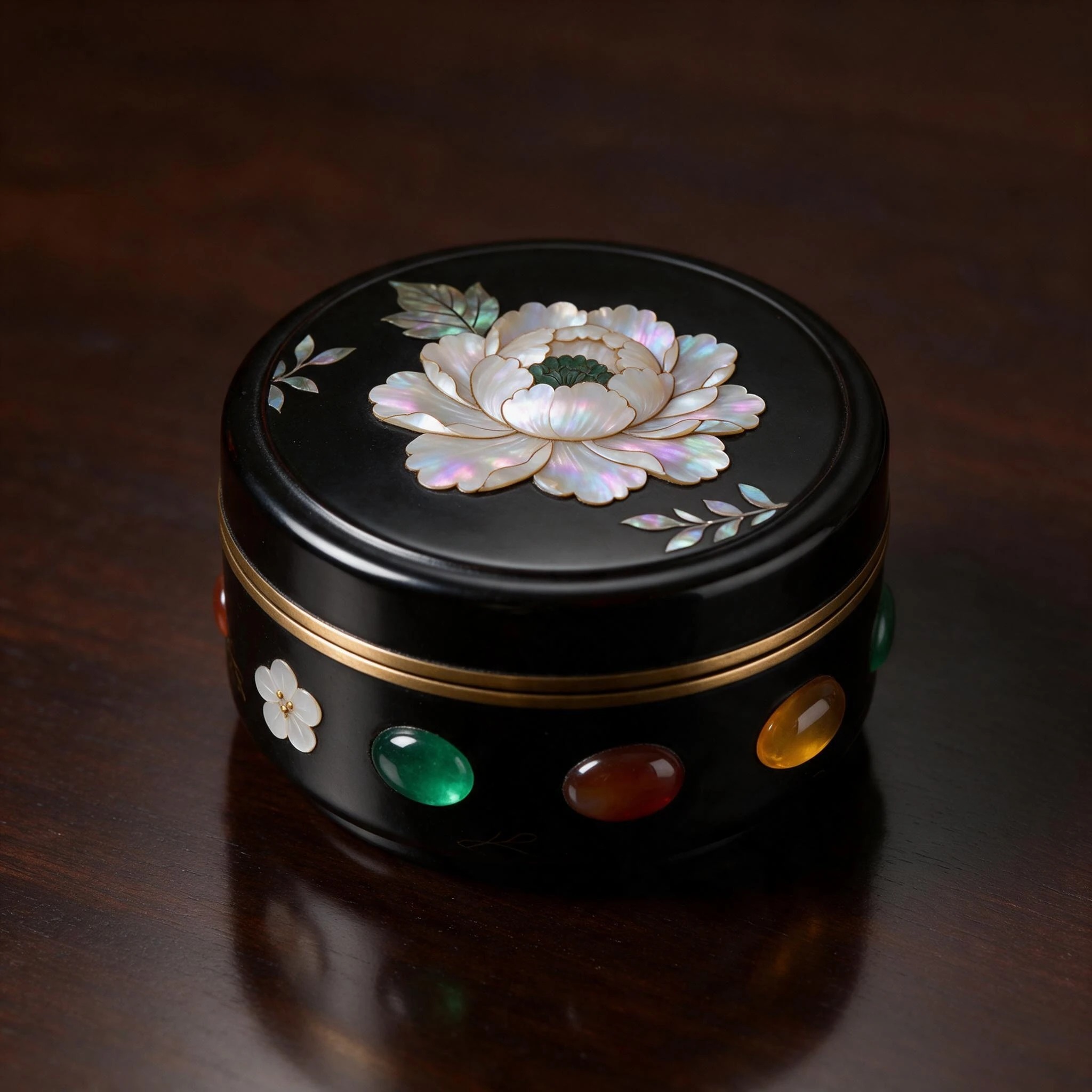
Older than bronze, lacquer is an indestructible organic armor forged from toxic botanical sap. Curing exclusively in absolute darkness and hand-burnished for months, it is the ultimate luxury of time—a mirror-black abyss sealing deep-sea shells and precious minerals for eternity.
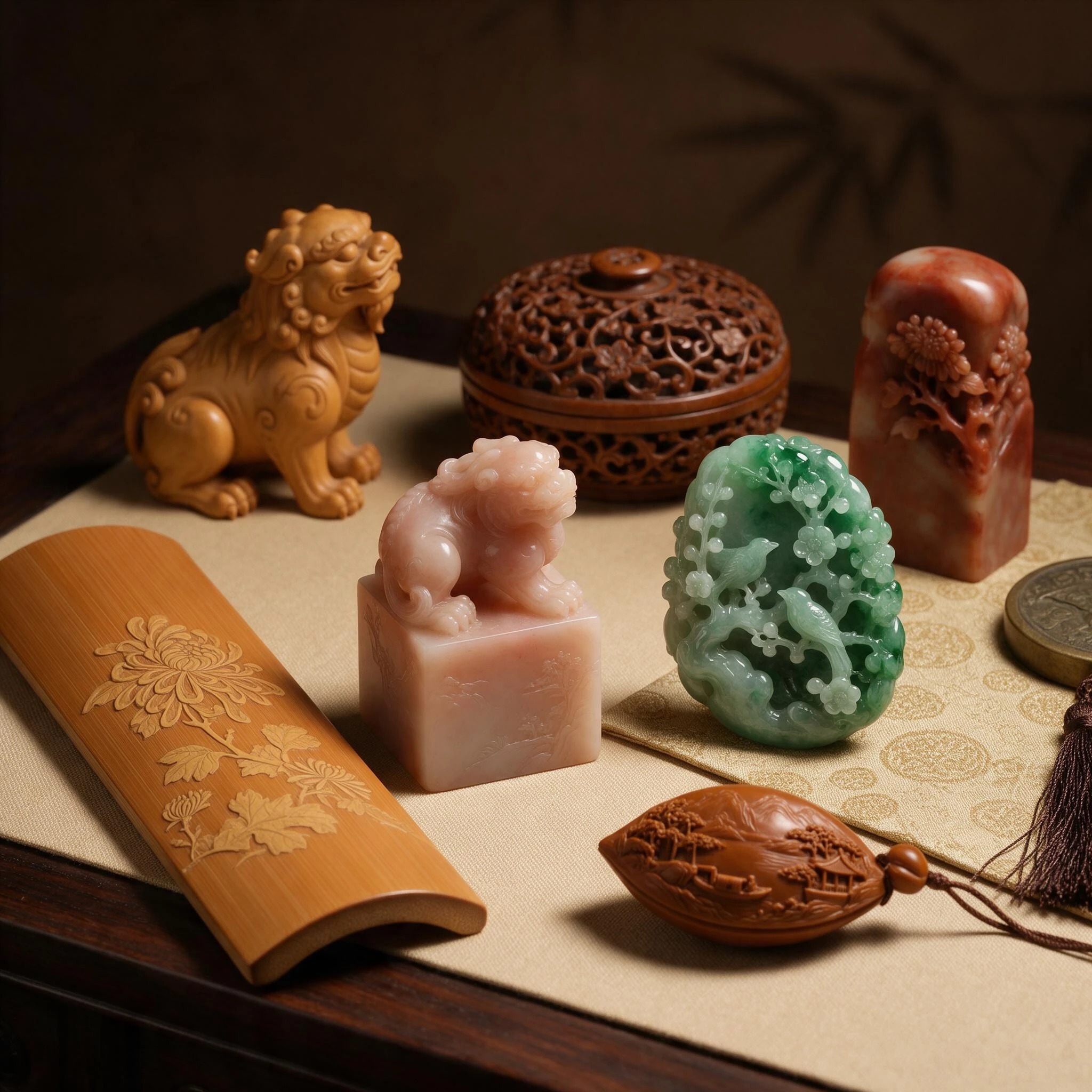
Over 8,500 years ago, Neolithic engineers discovered that they could reshape the earth not just by building up clay, but by tearing down solid matter. This was the birth of the subtractive arts. As metallurgical technology evolved from bronze to high-carbon steel, the ability to execute surgical strikes on increasingly dense materials transformed carving from a utilitarian necessity into the ultimate expression of imperial and spiritual authority. Mastering the distinct molecular structures of nephrite jade, bamboo vascular bundles, and old-growth timber, ancient artisans learned to "read" the invisible internal fault lines and grain vectors of their canvases. By the dynastic eras, this mechanical discipline had fractured into highly specialized architectural domains: monolithic stone guardians engineering spatial boundaries, deeply undercut wood panels transforming flat walls into three-dimensional dioramas, and microscopic seal engravings functioning as the absolute cryptographic signature of the Emperor.
The extreme prestige of the subtractive arts lies in a terrifying physical reality: it is a process with zero tolerance for error. Unlike painting or clay modeling, carved material cannot be put back. Before a single cut is made, a master carver must spend weeks analyzing a raw jade boulder or a dense mahogany log, mapping its internal tensions, cracks, and color gradients. A single misjudged strike of the mallet can shatter months of labor, rendering a priceless raw gemstone completely worthless. In the realm of microscopic pit carving (working on surfaces smaller than a thumbnail), artisans must synchronize the microscopic movements of their steel blades with the rhythm of their own heartbeats to prevent the fragile biological shell from snapping. You are acquiring the physical culmination of extreme risk management, anatomical precision, and irreversible mechanical force.
Over 8,500 years ago, Neolithic engineers discovered that they could reshape the earth not just by building up clay, but by tearing down solid matter. This was the birth of the subtractive arts. As metallurgical technology evolved from bronze to high-carbon steel, the ability to execute surgical strikes on increasingly dense materials transformed carving from a utilitarian necessity into the ultimate expression of imperial and spiritual authority. Mastering the distinct molecular structures of nephrite jade, bamboo vascular bundles, and old-growth timber, ancient artisans learned to "read" the invisible internal fault lines and grain vectors of their canvases. By the dynastic eras, this mechanical discipline had fractured into highly specialized architectural domains: monolithic stone guardians engineering spatial boundaries, deeply undercut wood panels transforming flat walls into three-dimensional dioramas, and microscopic seal engravings functioning as the absolute cryptographic signature of the Emperor.
The absolute apex of focal endurance was recorded in the Ming Dynasty with the legendary "Boat in an Olive Pit." A master carver sculpted a fully functional riverboat out of a single microscopic fruit pit—featuring a paneled roof, eight operable windows that could physically open and close, and five distinct human figures inside, each with readable facial expressions.
The artifacts curated within this category are governed by the highest echelons of protected subtractive engineering. The core execution protocols of our workshops rely directly on Jade Carving, Wood & Bamboo Carving, and Nut Carving (Weifang)—disciplines officially inscribed on the National Intangible Cultural Heritage List of China (Category: Traditional Fine Arts & Handicraft, Official Project Codes: VII-64, VII-39, and VII-76). Furthermore, the pinnacle of classical micro-engraving is strictly protected by the UNESCO Representative List of the Intangible Cultural Heritage of Humanity (Official UNESCO Code: 00217, The Art of Chinese Seal Engraving). Every piece stands as a certified vessel of living history, engineered to outlast generations.
Governed by raw material scarcity and extreme mechanical risk, flawless subtractive sculptures executed in nephrite jade or rare timber routinely anchor valuations from $40,000 to well over $5,000,000 USD.