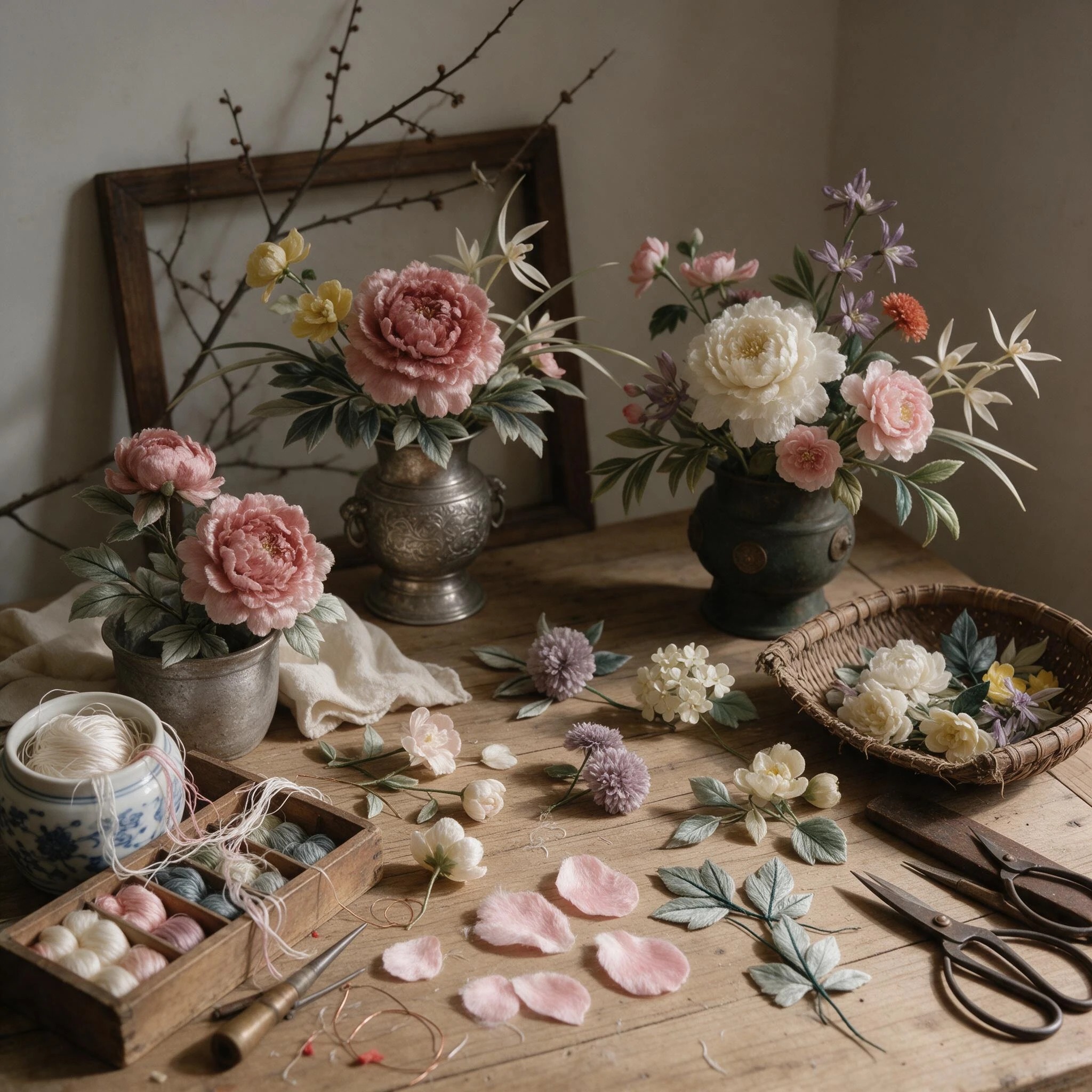
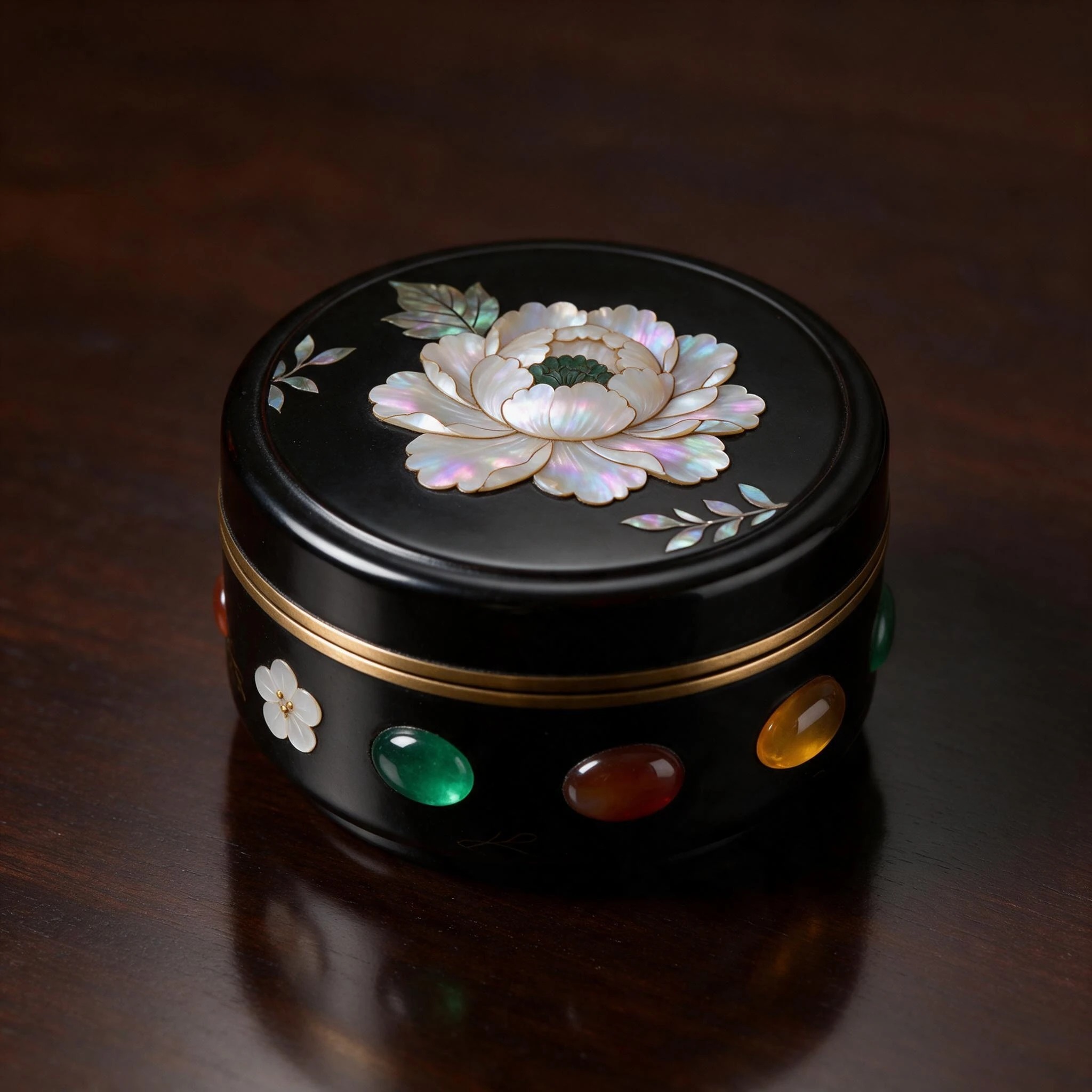
Older than bronze, lacquer is an indestructible organic armor forged from toxic botanical sap. Curing exclusively in absolute darkness and hand-burnished for months, it is the ultimate luxury of time—a mirror-black abyss sealing deep-sea shells and precious minerals for eternity.
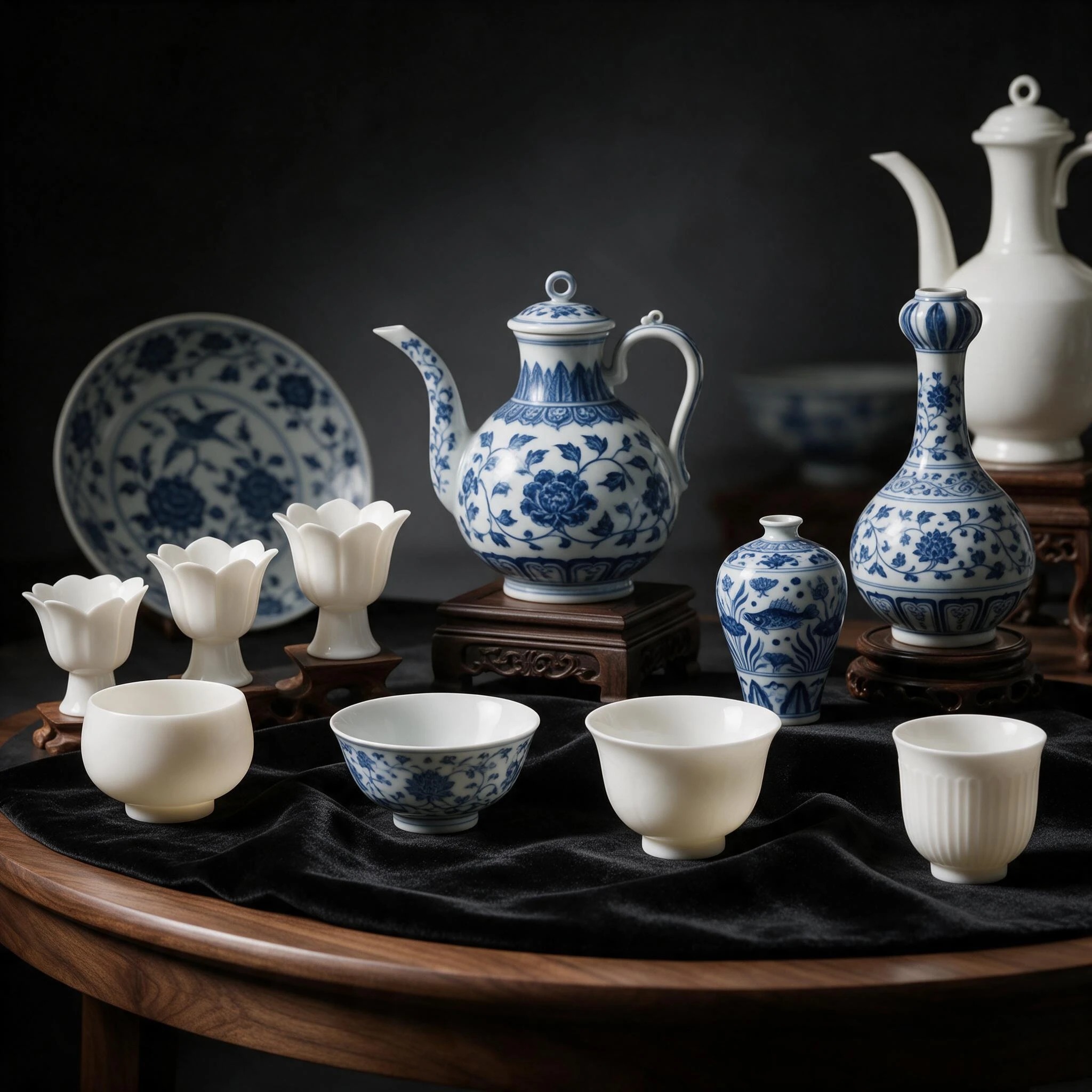
Around 10,500 years ago, early artisans discovered how to permanently alter the molecular structure of earth through the application of fire. But the true technological leap occurred when they discovered pure Kaolin earth and Petuntse (porcelain stone). By blending these raw minerals and pushing kiln thermodynamics past 1,300 degrees Celsius (2,372 degrees Fahrenheit), they triggered a violent molecular vitrification. The porous clay melted and fused into a completely non-porous, translucent, and incredibly rigid material that rang like a metallic bell when struck. This was no longer pottery; it was the birth of true porcelain. For centuries, this classified metallurgical secret commanded a monopoly over global trade, funding entire empires and prompting European monarchs to empty their treasuries in exchange for what they called "white gold."
The astronomical cost of museum-grade porcelain stems from its terrifying survival rate. In classical craftsmanship, there is an ancient engineering law: "Out of ten kilns, nine yield ruins." A single classical vessel requires 72 distinct, highly specialized manual processes before it even touches the fire. Master artisans must mine, crush, wash, and age the mineral earth for decades before it is thrown on a wheel, trimmed to a millimeter's thickness, and painted with volatile metallic oxides. Once the heavy kiln doors are sealed, human control ends and violent thermodynamics take over. Fluctuations in oxygen, atmospheric humidity, or a temperature drop of just a few degrees will warp, crack, or discolor the entire batch. You are not buying a molded cup or a mass-produced plate; you are acquiring the rare, flawless survivor of a chaotic thermal crucible.
Around 10,500 years ago, early artisans discovered how to permanently alter the molecular structure of earth through the application of fire. But the true technological leap occurred when they discovered pure Kaolin earth and Petuntse (porcelain stone). By blending these raw minerals and pushing kiln thermodynamics past 1,300 degrees Celsius (2,372 degrees Fahrenheit), they triggered a violent molecular vitrification. The porous clay melted and fused into a completely non-porous, translucent, and incredibly rigid material that rang like a metallic bell when struck. This was no longer pottery; it was the birth of true porcelain. For centuries, this classified metallurgical secret commanded a monopoly over global trade, funding entire empires and prompting European monarchs to empty their treasuries in exchange for what they called "white gold."
In 1717, the European obsession with Eastern porcelain reached a fanatical extreme. Augustus the Strong, the King of Poland, physically traded a literal army—a fully equipped regiment of 600 Dragoon cavalrymen—to the King of Prussia in exchange for just 151 blue-and-white porcelain vases. It remains the only time in history that human military force was directly bartered for baked clay.
The artifacts curated within this category are governed by the highest echelons of protected ceramic engineering. The core execution protocols of our workshops rely directly on Jingdezhen Handmade Porcelain, Dehua Porcelain Craftsmanship, and Shiwan Ceramic Art—disciplines officially inscribed on the National Intangible Cultural Heritage List of China (Category: Traditional Handicraft, Official Project Codes: VIII-134, VIII-136, and VIII-15). Furthermore, the pinnacle of classical high-fire kiln thermodynamics is strictly protected by the UNESCO Representative List of the Intangible Cultural Heritage of Humanity (Official UNESCO Code: 00205). Every piece stands as a certified vessel of living history, engineered to outlast generations.
In the realm of hard physical assets, classical high-fire porcelain remains the undisputed apex, with flawless surviving vessels commanding anywhere from $50,000 to astronomical $30,000,000 USD valuations.